Tarot has been a tool for self-reflection and divination for centuries, offering insights into our past, present, and future. Whether you're drawn to the mystical imagery, seeking guidance, or simply curious about this ancient practice, understanding the basics of tarot can open doors to profound self-discovery.
The Structure of a Tarot Deck
A standard tarot deck contains 78 cards divided into two distinct groups: the Major Arcana and the Minor Arcana. Each group serves a unique purpose in a reading.
Major Arcana (22 cards)
The Major Arcana represents the major life themes, spiritual lessons, and archetypal energies we encounter on our journey. These cards carry significant weight in a reading and often indicate pivotal moments or important life transitions.
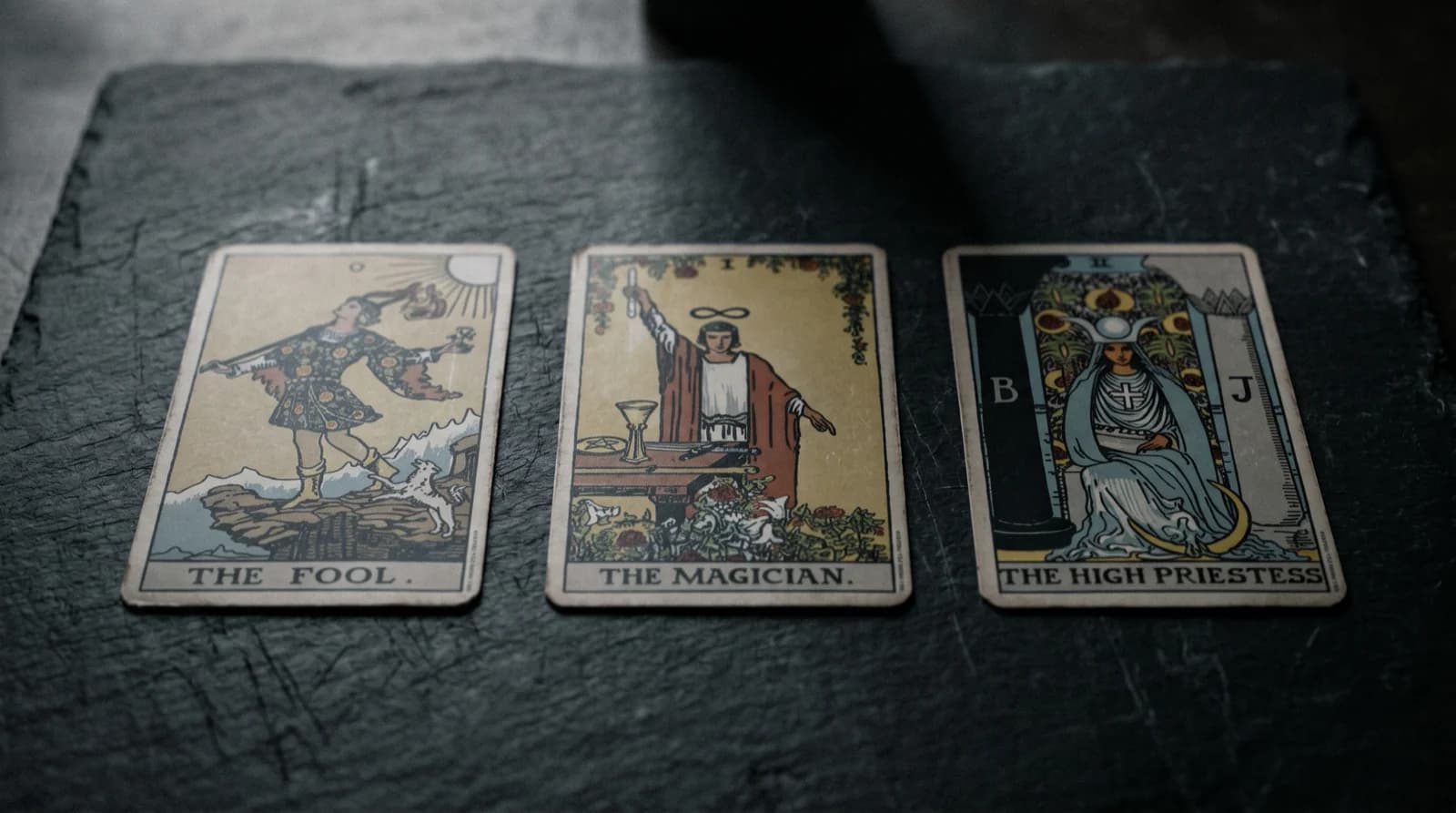
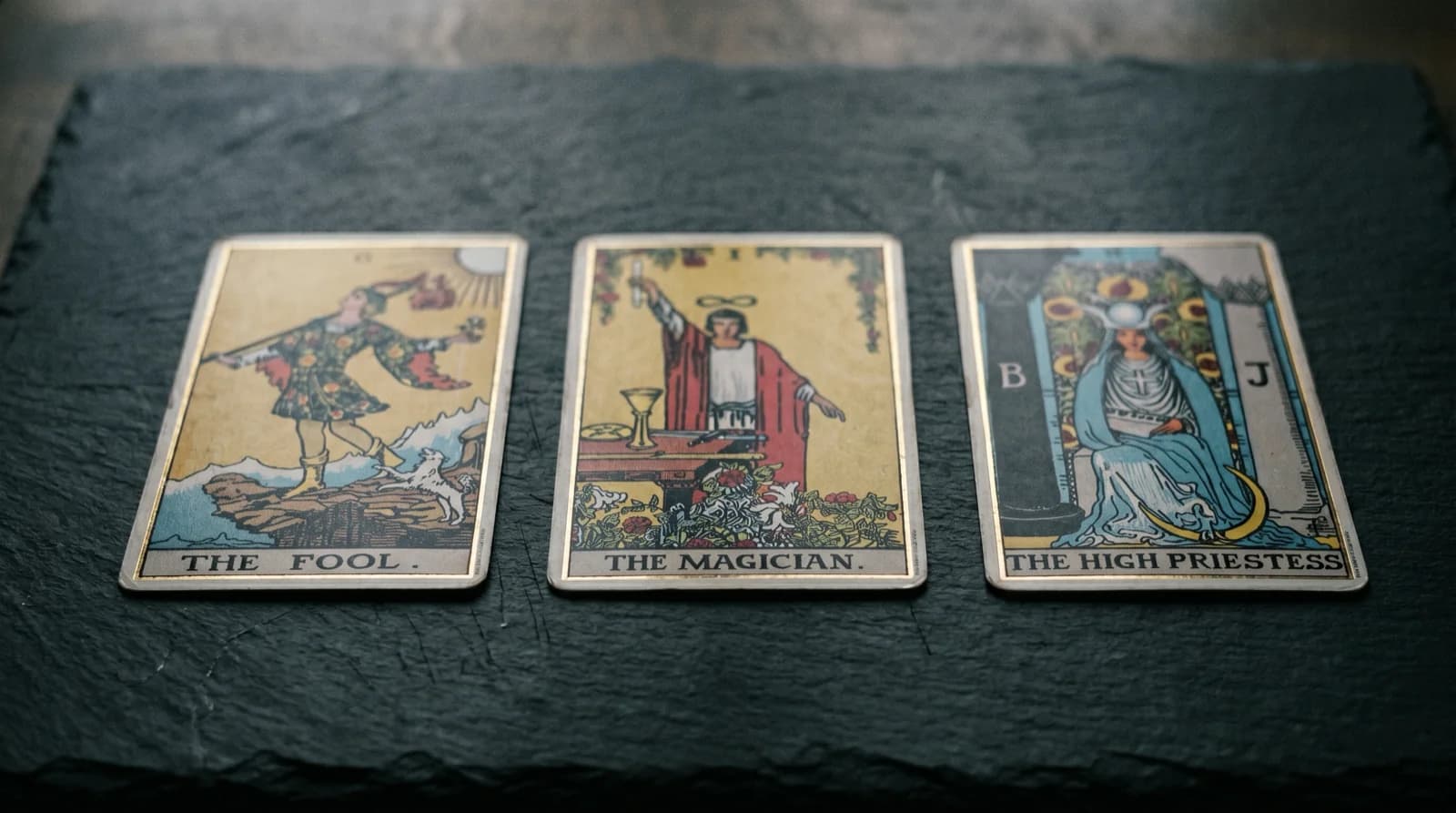
The journey begins with The Fool (0) — representing new beginnings, innocence, and unlimited potential — and culminates with The World (21), symbolizing completion, wholeness, and cosmic consciousness. Between these bookends lie powerful archetypes: The Magician teaches us about manifestation and personal power, The High Priestess reveals hidden knowledge and intuition, The Emperor embodies structure and authority, while The Tower shows us necessary destruction that precedes transformation.
When a Major Arcana card appears in your reading, pay close attention. These cards suggest that the situation you're asking about involves forces or lessons beyond your immediate control — karmic patterns, soul contracts, or significant life lessons that demand your attention.
Minor Arcana (56 cards)
The Minor Arcana deals with the day-to-day events, challenges, and opportunities of our lives. Divided into four suits — Wands, Cups, Swords, and Pentacles — each suit corresponds to a different element and area of life.
Wands (Fire) represent passion, creativity, inspiration, and action. They speak to our ambitions, what drives us forward, and how we express our will in the world.
Cups (Water) govern emotions, relationships, intuition, and matters of the heart. When Cups appear, they often reveal the emotional undercurrents of a situation.
Swords (Air) deal with thoughts, communication, conflict, and mental clarity. These cards can be challenging, often pointing to intellectual struggles or difficult truths that must be faced.
Pentacles (Earth) relate to material matters, finances, health, and the physical world. They ground us in practical reality and often speak to our sense of security and stability.
Each suit contains cards numbered Ace through Ten, plus four Court Cards (Page, Knight, Queen, and King) representing different personality types or aspects of ourselves.
Your First Three-Card Spread
The three-card spread is the perfect starting point for beginners. Its simplicity allows you to focus on learning card meanings while still providing meaningful insights. The most common interpretation uses Past-Present-Future positions:
Position 1 (Past): What has led you to this moment? This card reveals the foundation or root cause of your current situation.
Position 2 (Present): Where are you right now? This card illuminates your current circumstances, challenges, or state of being.
Position 3 (Future): What lies ahead if you continue on your current path? This card suggests potential outcomes based on your present trajectory.
To perform your first three-card reading, find a quiet space, shuffle your deck while focusing on your question, and draw three cards from left to right. Lay them face-up and take time to observe each card before consulting meanings. Notice the imagery, colors, and your immediate emotional response.
As you interpret each card, look for connections between them. Does the story flow naturally from past to present to future? Are there repeating symbols or colors? Multiple cards from the same suit often emphasize that area of life.
The Celtic Cross
The Celtic Cross is a ten-card spread that provides deep, comprehensive insight into complex situations. While it may seem daunting to beginners, understanding this classic layout will serve you well throughout your tarot journey.
Position 1 (Present): The heart of the matter, your current situation.
Position 2 (Challenge): The immediate challenge or obstacle crossing your path.
Position 3 (Past): Recent past events that influence the present.
Position 4 (Future): What is approaching in the near future.
Position 5 (Above): Your highest aspirations, best possible outcome, or conscious goals.
Position 6 (Below): Subconscious influences, hidden factors, or the foundation beneath the situation.
Position 7 (Advice): Your current position or how you view the situation.
Position 8 (External Influences): How others see you or external factors affecting the situation.
Position 9 (Hopes and Fears): Your deepest hopes or greatest fears about the outcome.
Position 10 (Outcome): The likely outcome if things continue on their current course.
The Celtic Cross requires patience to master, but it rewards that patience with nuanced, layered insights. Start by reading each position individually, then look for patterns across the entire spread. How do the cards in the conscious realm (positions 5, 7, 8) relate to those in the subconscious (position 6)? Is there tension between your hopes (position 9) and the predicted outcome (position 10)?
Getting Started with MystiQ
Ready to draw your first cards? Try a tarot reading on MystiQ — our AI interprets your spread with deep esoteric wisdom, helping you understand the nuanced meanings and connections between cards. Whether you choose a simple three-card spread or dive into the Celtic Cross, you'll receive personalized guidance that honors both traditional interpretations and your unique question.
Remember, tarot is a practice. The more you work with the cards, the more fluent you become in their symbolic language. Trust your intuition, keep a journal of your readings, and allow the cards to speak to you in their own way.